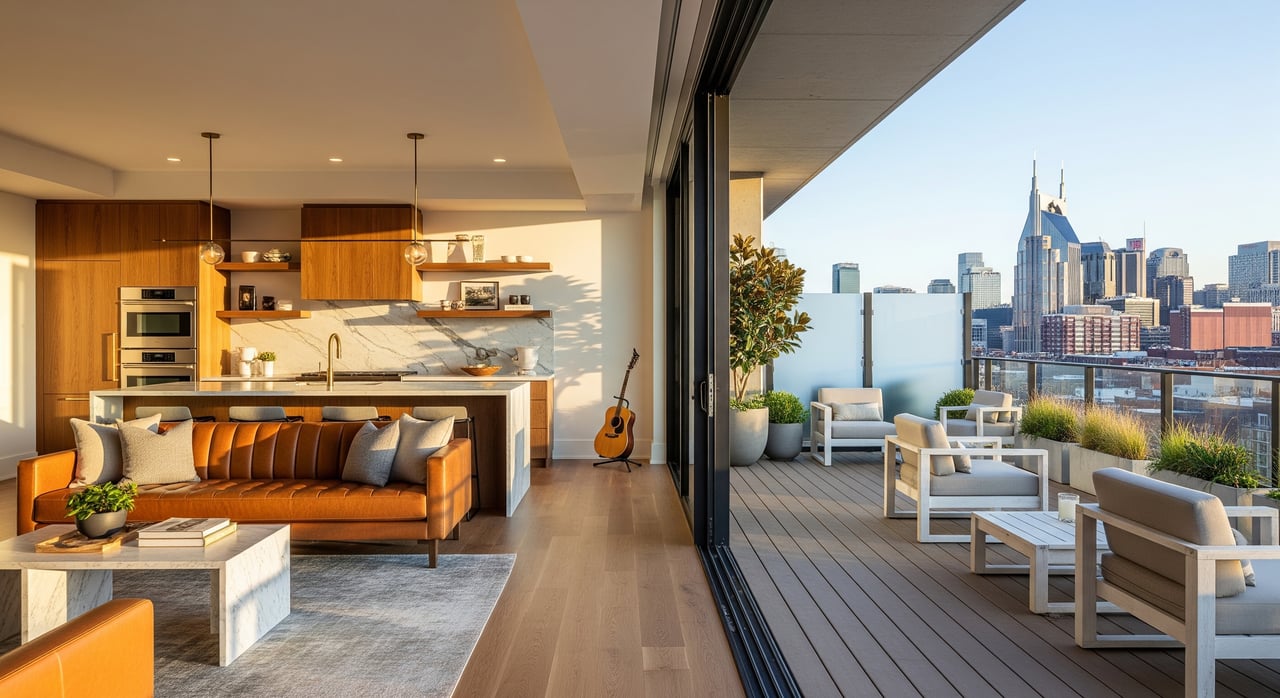
Is a Nashville condo the right fit for your lifestyle? If you love walkable streets, live music, and the ease of low-maintenance living, the answer might be yes. Still, you may wonder about noise, parking, HOA rules, and what daily life really looks like in the city’s core. This guide gives you a clear picture of condo living in Nashville so you can decide with confidence. Let’s dive in.
Nashville condo neighborhoods
Downtown and SoBro
You live close to the action here. Many buildings sit within a short walk of restaurants, music venues, and riverfront paths along the Cumberland. Expect an energy-filled vibe and more frequent event days that can influence noise and traffic.
The Gulch and North Gulch
These areas blend luxury towers, shops, and dining. Many buildings offer curated amenities and secure parking. North Gulch also includes newer mixed-use development and loft-style options.
Midtown and Vanderbilt area
If you work in healthcare, higher education, or hospitality, this location can shorten your commute. You are near restaurants and nightlife, with a quick connection to Downtown. Buildings range from newer towers to older conversions with fewer amenities.
East Nashville near Five Points
Close to creative dining, music, and greenways, East Nashville offers a different urban flavor. You may find smaller projects or loft conversions, sometimes with limited amenities or parking. It is a good option if you value local culture and easy access to parks.
Germantown and Salemtown conversions
Select infill and loft-style buildings appear here. Amenities can be lighter than luxury towers, but you gain character and proximity to emerging dining and coffee spots. Walkability is strong, and many residents bike or scooter to Downtown.
Daily life and amenities
Typical building features
Many Nashville condo buildings provide controlled access and a mix of lifestyle amenities. Common perks include fitness centers, rooftop terraces, lounges, concierge or door staff in higher-end towers, secure package rooms, bike storage, and pet areas. Covered garage parking is common in newer buildings, while some older conversions may not include assigned spaces.
Lock-and-leave living
Condo living is designed for simplicity. Maintenance of common areas, exterior elements, and amenities is handled by the HOA. You can lock the door and travel without worrying about yard work or exterior upkeep, which is ideal if you have a busy schedule or travel often.
Amenity trade-offs
Higher-end amenities can boost your daily experience, but they usually increase monthly HOA dues. Older or smaller buildings often have lower dues but fewer shared spaces. Think about what you will actually use, like a gym or rooftop, and what you can live without.
Monthly costs to expect
HOA dues and what they cover
HOA dues vary by building and amenity level. Dues typically fund common area maintenance, building insurance for shared elements, reserves for future repairs, and sometimes utilities like water, trash, or gas. Compare HOA costs alongside your mortgage and taxes because dues can meaningfully shape your total monthly payment.
Utilities and taxes
Electricity and internet are usually billed separately. Some buildings include water, sewer, and garbage in dues, but not all. Property taxes follow Davidson County rates, and Tennessee does not tax wage income at the state level. Verify current assessments and rates with local offices before you buy.
Special assessments risk
Condo associations sometimes levy special assessments for unexpected repairs or large capital projects. Review the association’s reserve fund, reserve study, and assessment history. Strong reserves can help reduce the chance of big, surprise costs.
Rules that shape your experience
Renting and STR policies
Rental and short-term rental policies vary by building. Some communities limit leasing or short-term rentals, which can affect your plans if you want to rent in the future. Confirm owner-occupancy ratios, minimum lease terms, and any short-term rental rules before you write an offer.
Pets, parking, and smoking
Every building sets its own policies. Common rules cover pet size or breed limits, where pets can be walked, how parking is assigned, guest parking, and smoking or nuisance rules. Make sure the building’s policies fit your lifestyle.
Financing approvals
Not every condo project is eligible for FHA or VA loans, and some conventional programs require project-level approval. If you plan to use these financing options, check the project’s approval status early. This can save you time and protect your earnest money.
Noise, crowds, and events
Where noise comes from
In core areas, noise can come from live music, nightlife, traffic, and construction. Expect sound levels to spike on evenings, weekends, and during major events or festivals. Buildings near Broadway and other venues often feel the impact most during peak times.
How to test and mitigate
Ask about soundproofing details, such as double-pane windows and sound-rated walls or floors. Higher floors are usually quieter. Visit the building during evening hours or a major event to experience the real sound environment. If a quiet home is a priority, this step is essential.
Parking and getting around
Assigned parking and fees
Many buildings include deeded or assigned parking in a garage. Some sell spaces separately or charge monthly fees. In under-parked buildings, you may face limited spaces or waitlists. Ask about what is included with a specific unit and what guest parking options exist.
Guest parking and rideshare
Street parking near the core is limited, and guest parking in garages can be restricted or metered. If you host often, look into guest pass systems or validations. Rideshare is common citywide, but event congestion can slow pickup and increase surge pricing.
Transit, bikes, and walkability
WeGo Public Transit operates bus routes throughout Nashville, with stronger coverage in the core areas. Many residents mix car use, rideshare, biking, scooters, and walking. Greenways and bike paths provide both recreation and commuting options in certain corridors. If you work outside the core or in industrial nodes, map your commute against rush hour and event schedules.
Is a Nashville condo right for you?
Who thrives
- Young professionals who want walkability, dining, music, and low-maintenance living.
- Buyers who value building amenities like a gym, rooftop, or concierge.
- People who travel often and want a lock-and-leave home.
- Empty-nesters who prefer urban convenience and social spaces.
Who may prefer alternatives
- Households that need larger living spaces, storage, and a private yard.
- Buyers who need very low noise levels or strict control of their environment.
- Investors seeking flexible rental options in buildings with restrictive leasing policies.
Smart buyer checklist
Use this quick list to keep your search focused:
- Lifestyle match: Do you value nightlife and walkability enough to accept event days and potential noise?
- Space needs: Will a typical condo layout and storage work for your lifestyle and belongings?
- Budget analysis: Include HOA dues, possible parking fees, and the risk of special assessments in your monthly budget.
- Financing needs: Confirm whether the project is eligible for your loan type, including FHA or VA.
- Rental rules: Verify leasing caps, owner-occupancy requirements, and short-term rental policies.
- Pet policy: Check size, number, and breed rules and whether pet amenities exist.
- Parking plan: Confirm deeded or assigned spaces and guest parking options.
- Noise test: Visit at night or during an event to gauge sound levels. Ask about window and wall construction.
- HOA health: Review financials, reserve study, meeting minutes, insurance certificates, and assessment history.
Questions to ask at showings
Bring these questions to your tour or pre-offer review:
- What do the HOA dues cover exactly, including utilities and amenities?
- How much is in the reserve fund and when was the last reserve study completed?
- Are any special assessments planned or recently completed? For what projects?
- What are the rental and short-term rental policies? Are there leasing caps?
- Is the project approved for FHA, VA, or specific conventional programs?
- What percentage of units are owner-occupied versus investor-owned?
- Any ongoing or past litigation involving the association or developer?
- What is the parking arrangement? Is the space deeded or rented? How is guest parking handled?
- Are there documented noise complaints? What are quiet hours and enforcement practices?
- Who manages the building and how responsive is management?
- Are storage lockers or bike rooms available? Included or extra cost?
- What insurance does the association carry versus what you must purchase? Do you need HO-6 and loss assessment coverage?
- How are packages handled? Are there secure lockers or concierge procedures?
How we help you choose with confidence
Condo buildings differ widely in amenities, rules, and financial health. You deserve a clear, risk-aware plan before you buy. Our team focuses on protective advocacy, straightforward guidance, and local insight across Nashville’s core neighborhoods. When you are ready to tour, we will help you compare buildings, understand HOA documents, and choose a home that fits your daily life and long-term goals.
If you are weighing a Nashville condo against other options in Middle Tennessee, let us be your trusted guide. Start your search with Kenny Stephens and move forward with confidence.
FAQs
What should I budget for HOA dues in Nashville condos?
- Dues vary widely by building and amenity level. Include them with your mortgage and taxes, and confirm exactly which utilities and services they cover.
How noisy is it to live near Downtown Nashville?
- Expect higher evening and weekend noise, with spikes during festivals and major events. Visit during peak times and ask about the building’s soundproofing.
Do most Nashville condos include parking?
- Many newer buildings include assigned or deeded garage spaces, sometimes for an added fee. Guest parking and street parking can be limited in core areas.
Are short-term rentals allowed in Nashville condo buildings?
- Policies vary. Some buildings limit or prohibit short-term rentals and set minimum lease terms. Confirm rules and owner-occupancy thresholds before you buy.
Can I use FHA or VA financing for a Nashville condo?
- Some projects are eligible and some are not. Check the condo project’s approval status with your lender early in the process.
What documents should I review before making an offer?
- Review HOA financials, reserve study, meeting minutes, insurance documents, assessment history, rental policies, parking details, and any litigation disclosures.